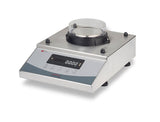
Scientific Marine Scale

M3 Series Scientific Marine Scale

The M3 Series is a motion-compensated scientific scale in 316L stainless steel for weighing small samples at sea. It is built for researchers and crews who need gram and sub-gram readings on a moving vessel.

Read the full description
Capacity
300–6000 g
Readability
0.1–5 g
Build
316L stainless
Models
12
Marine scales overview 2026 (brochure)PDF

Enter your name and email address and we will email you the download link.

Ask a question about this productQuote-based pricing · configured to your vessel

Models

Every model has its own article number. Add the models you need to your quote request – no prices, no obligation.

Article no.ModelCapacity ReadabilityPlatformAdd to quote request
WPL-M3-120x120-300G M3-S 300 g 0.1–0.2 g 120×120 mm
WPL-M3-120x120-600G M3-S 600 g 0.2–0.5 g 120×120 mm
WPL-M3-120x120-1500G M3-S 1500 g 0.5–1 g 120×120 mm
WPL-M3-120x120-3000G M3-S 3000 g 1–2 g 120×120 mm
WPL-M3-120x120-6000G M3-S 6000 g 2–5 g 120×120 mm
WPL-M3-145x145-600G M3-M 600 g 0.2–0.5 g 145×145 mm
WPL-M3-145x145-1500G M3-M 1500 g 0.5–1 g 145×145 mm
WPL-M3-145x145-3000G M3-M 3000 g 1–2 g 145×145 mm
WPL-M3-145x145-6000G M3-M 6000 g 2–5 g 145×145 mm
WPL-M3-270x270-1500G M3-L 1500 g 0.5–1 g 270×270 mm
WPL-M3-270x270-3000G M3-L 3000 g 1–2 g 270×270 mm
WPL-M3-270x270-6000G M3-L 6000 g 2–5 g 270×270 mm

Options change the article number. Mention it in a question or quote request so we know exactly which model you mean. View quote request →

Description

The M3 Series is a scientific marine scale for weighing small samples accurately at sea, on research vessels and other ships. It has three platform sizes, 120×120 mm, 145×145 mm and 270×270 mm, and five capacities: from 300 g with 0.1–0.2 g readability up to 6000 g with 2–5 g readability.

Precision on a moving deck

Vessel motion disturbs every reading, and with small samples that disturbance is large compared with the resolution you need. The M3 is motion-compensated: it adjusts automatically for the fluctuations in force caused by waves and vibration, so the displayed value stays usable at sea. Why ordinary scales fail at sea explains the physics and how motion compensation works explains what compensation achieves. If your cruises cover a wide range of latitudes, read gravity, latitude and calibration as well.

Built in 316L stainless steel

The M3 is made of stainless steel 316L, a low-carbon grade chosen for harsh marine environments. The construction is waterproof and robust enough for daily use on deck and in a wet laboratory. For the difference between steel grades and what enclosure ratings mean, see stainless steel 304, 316 and 316L compared and IP67, IP68 and IP69K explained.

Options for fieldwork

The M3 can be configured for the way your team works:

  • Windcover (120×120 and 145×145 mm platforms): shields the pan and sample from air movement, which matters when you read to tenths of a gram on an open deck.
  • Carrying case and battery: for moving the scale between sampling stations or vessels.
  • Bluetooth LE and USB: for sending readings to a tablet, laptop or data system.
  • WeightControl IOT module: automatic logging of every weighing, with export and an API.

Reporting and data

The M3 can be connected to the R10 range of indicators, which adds built-in reporting, statistics and printing that can be customised to your sampling protocol. With WeightControl, readings are logged automatically and exported as CSV or JSON. See weighing data logging and connecting a scale through an API.

Typical applications

The research vessels hub brings together articles on sampling, data handling and scale selection.

Verified versions for trade use

Selected M3 models are available as a verified version for trade use in the EU and in countries that follow OIML recommendations. For research work a calibration certificate is usually sufficient, but a verified scale is needed when the weighing result determines a price or an invoice. A verified scale carries the metrological markings and is sealed after verification, so its adjustment cannot be changed unnoticed. Which platform and capacity combinations can be supplied as a verified version depends on the model, so state in your quote request that you need the scale for trade use. NAWI and MID directives explained and OIML R51 vs R76 describe the rules, and the legal metrology hub covers verification and re-verification.

Calibration certificate

Every M3 scale can be supplied with an EURAMET cg-18 calibration certificate as an option. The certificate records the repeatability, eccentricity, errors of indication and measurement uncertainty of the scale, which quality systems and audits often ask for. Calibration is not the same as legal verification; EURAMET cg-18 calibration explained sets out the difference.

Choosing the right configuration

Choose the platform first, then the capacity. The 120×120 mm platform (M3-S) is available with all five capacities (300, 600, 1500, 3000 and 6000 g). The 145×145 mm platform (M3-M) takes 600 to 6000 g. Both can have a windcover. The 270×270 mm platform (M3-L) takes larger samples or containers and is available with 1500, 3000 and 6000 g.

A lower capacity gives finer readability, so size the scale to your heaviest sample plus any container. Choosing a scientific marine scale and capacity and readability explained walk through the decision. Then choose your model in the models table or request a quote.

Features

  • Motion-compensated scientific scale for use at sea
  • Verified version for trade use (EU/OIML) available for selected models
  • Readability from 0.1–0.2 g on the 300 g model
  • Five capacities: 300, 600, 1500, 3000 and 6000 g
  • Three platforms: 120×120, 145×145 and 270×270 mm
  • Stainless steel 316L, waterproof and robust
  • Connects to the R10 indicator range for reporting, statistics and printing
  • Options: WeightControl IOT module, Bluetooth LE, battery, USB
  • Windcover optional on the 120×120 and 145×145 mm platforms
  • Carrying case optional
  • Optional EURAMET cg-18 calibration certificate

General

ManufacturerWPL Industries
SeriesM3
TypeMotion-compensated scientific marine scale
ModelsM3-S · M3-M · M3-L
Used inResearch vessels and scientific sampling
DeliveryWorldwide, 50+ countries

Technical specifications

TypeMotion-compensated scientific marine scale
Capacities300, 600, 1500, 3000 and 6000 g
Readability0.1–0.2 g (300 g) to 2–5 g (6000 g)
PlatformsM3-S 120×120 · M3-M 145×145 · M3-L 270×270 mm
M3-S capacities300, 600, 1500, 3000, 6000 g
M3-M capacities600, 1500, 3000, 6000 g
M3-L capacities1500, 3000, 6000 g
MaterialStainless steel 316L
Trade useVerified version (M marking) for selected models, EU/OIML
DesignWaterproof, robust construction for use at sea
IndicatorsConnects to the R10 indicator range (reporting, statistics, printing)
OptionsWeightControl IOT module, Bluetooth LE, battery, USB, carrying case, EURAMET cg-18 calibration certificate
WindcoverOptional, M3-S and M3-M
FAQ

M3 Series Scientific Marine Scale – frequently asked questions

What is the finest readability of the M3?

The 300 g model on the 120×120 mm platform reads in steps of 0.1–0.2 g. Readability becomes coarser as capacity rises: 0.2–0.5 g at 600 g, 0.5–1 g at 1500 g, 1–2 g at 3000 g and 2–5 g at 6000 g.

When do I need the 270×270 mm platform?

Choose the 270×270 mm platform when samples or their containers do not fit on a 120×120 mm pan, for example trays or larger specimens. It is available with 1500, 3000 and 6000 g capacities. For loads below 1500 g, or if you need a windcover, choose the 120×120 or 145×145 mm platform; only the 120×120 mm platform takes the 300 g capacity.

Why would I need a windcover on a scientific scale?

Air movement exerts a small force on the pan and on the sample. At a readability of tenths of a gram, that force can be enough to make the reading unstable on an open deck or near ventilation. The optional windcover for the 120×120 and 145×145 mm platforms shields the weighing area from draughts.

Can the M3 record data automatically for a sampling protocol?

Yes. Connected to an R10 indicator, the M3 offers built-in reporting, statistics and printing. With the optional WeightControl IOT module, every weighing is logged automatically and can be exported as PDF or CSV, or read in JSON through the WeightControl API for your own data system.

Can the M3 be moved between vessels or stations?

Yes. A carrying case and a battery are available as options for all three platform sizes, and Bluetooth LE lets you send readings without a cable. Moving a scale can change its calibration conditions, so check the reading with a reference weight after relocation, especially when you move to a very different latitude.

Can the M3 be used for trade?

Selected M3 models are available as a verified version for trade use in the EU and in countries that follow OIML recommendations. You need that version when the weighing result determines a price or an invoice; for scientific sampling a calibration certificate is usually enough. State in your quote request that you need a verified scale, with the platform and capacity you have in mind.

Does WPL have a dealer in my country?

WPL works with more than 20 dealers in different countries. Fill in the contact form with your location, and we will put you in touch with the dealer for your region or help you directly.

Knowledge centre

Learn more before you choose

Research vessels

Precision Weighing of Small Samples at Sea: Otoliths, Gonads and Stomach Contents

Choose a readability no larger than about 1 % of the lightest sample. At sea, a motion-compensated scale reading to 0.1 g with a wind cover suits gonads, livers and...

Read guide
Research vessels

Choosing a Scientific Marine Scale for a Research Vessel

Start from the samples: list each weighing task with its mass range and required resolution, then choose capacity, readability and platform per station. Check motion compensation under realistic conditions, stabilisation...

Read guide
Legal metrology

EURAMET cg-18 Calibration of Weighing Instruments Explained

EURAMET cg-18 is the European guideline for calibrating non-automatic weighing instruments. A cg-18 calibration tests repeatability, errors of indication across the range and eccentricity, and reports each error with its...

Read guide
Weighing at sea

Motion Compensation in Marine Scales: What It Does and How to Judge It

Motion compensation lets a marine scale show the true weight of a load while the deck heaves, pitches and rolls. Good compensation gives a steady reading, fast settling, and correct...

Read guide
Weighing at sea

Gravity, Latitude and Why Marine Scales Need Gravity Compensation

Gravity increases by about 0.53% from the equator (9.780 m/s²) to the poles (9.832 m/s²). A scale adjusted at 52° N reads about 0.14% heavy at 70° N: 21 g...

Read guide
Buying guides

Capacity vs Readability: Choosing the Right Weighing Range

Capacity is the heaviest load a scale can weigh; readability is its smallest displayed step. Choose capacity from the heaviest gross load plus a margin for motion and impacts, then...

Read guide
Talk to an engineer

Tell us what you weigh and where

Every vessel is different. Share your application and we will recommend a scale, platform size and options – with a no-obligation quote.